A historic warship, a top-down camera, and a story to tell from the air.
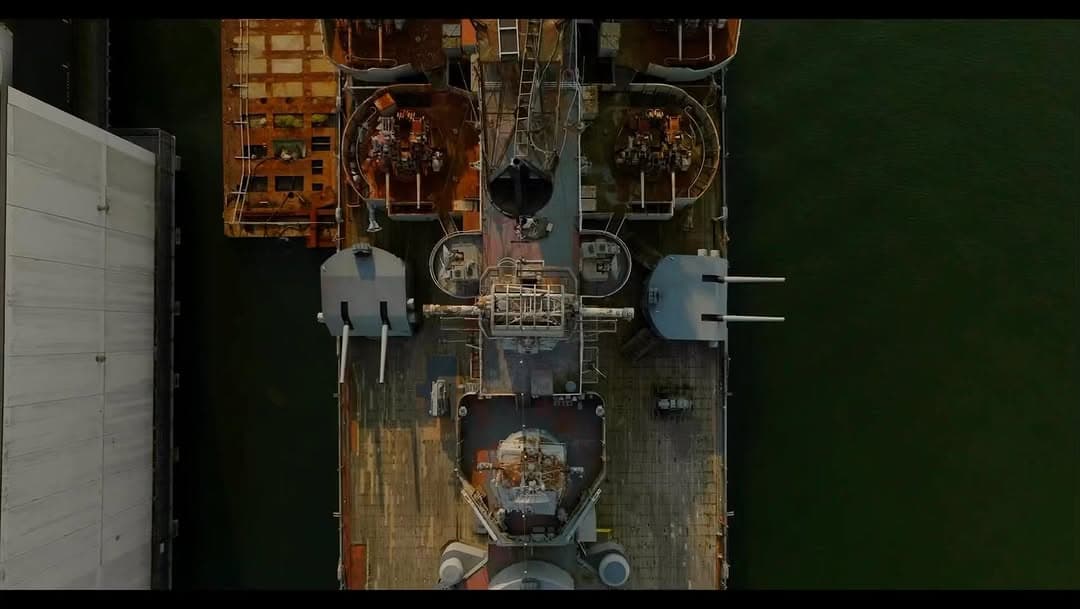
The USS Salem (CA-139) is a decommissioned heavy cruiser that now sits as a floating museum — a vast steel subject with gun turrets, decks and rigging that only really reveal their scale from directly above. For a documentary shoot aboard the ship, we brought the aerial unit in to open the story from the air.
Documentary aerials are a different discipline from a scripted commercial. There's no second take of a real location and no art department to dress the frame — the job is to read the subject honestly and find the shot that tells the audience where they are and why it matters.
Reading a subject from directly above
The signature frame here is the top-down: the camera looking straight down the centreline of the ship, the gun turrets and deck geometry laid out symmetrically against the dark water. A top-down move turns a familiar object into something almost abstract — it strips away the eye-level view a visitor would have and gives the audience information they could never get from the ground.
From there we build outward — a slow rise to reveal the full length of the hull against the dock, an orbit to place the ship in its harbour, a low pass along the deck to bring back scale and texture. Each move is chosen to answer a question the documentary is asking: how big, how old, how alone.
Why documentary work is its own craft
On a documentary you're often flying real, uncontrolled environments — public museums, water, changing light, a small crew and a tight schedule. That puts a premium on planning: knowing the airspace, scouting the safe launch and recovery points, and getting the essential shots first in case the weather or the light turns.
It also rewards restraint. The best documentary aerials don't show off the drone — they serve the edit, cutting cleanly with interviews and ground footage so the audience feels the place without ever thinking about how it was filmed.
Frequently asked
- Do you shoot aerials for documentaries?
- Yes. Documentary and factual work is a core part of what we do — from historic locations and landscapes to reportage. We handle the airspace, permits and safe operation, and deliver aerials that cut cleanly with interviews and ground coverage.
- What is a top-down aerial shot?
- A top-down (or 'God's-eye') shot points the camera straight down at the subject from directly overhead. It flattens a scene into graphic, often symmetrical composition and is ideal for revealing the true scale and layout of large subjects like ships, buildings or landscapes.
- Can you fly drones over historic sites and museums?
- Where it's permitted, yes — with the right authorisation and a safety plan for the location and any public present. We assess the airspace and site access as part of pre-production and only fly where it's legal and safe to do so.
Originally shared on Instagram.